Best Wine Resort
The Yeatman
€€€€ · LuxuryWine-focused trips that will spend substantial time at the hotel and nearby cellars.
Choose cellar immersion, the easiest bridge crossing or a Porto-side dining base.
Folio earns a commission if you book through these links, at no extra cost to you. How we earn from links
 Traditional rabelo boats reflect on the Douro River in Porto at twilight, showcasing waterfront architecture.
Wine-focused trips that will spend substantial time at the hotel and nearby cellars.
Travellers balancing Gaia views with frequent trips to Porto.
Short stays mixing one cellar visit with broader Porto dining and sightseeing.
| Option | Best for | Why choose it | Trade-off | Access |
|---|---|---|---|---|
| Gaia Wine Lodge Hillside (The Yeatman / Vincci Ponte de Ferro)Hillside wine resort & bridgehead | Travellers prioritizing port cellar tours, panoramic Douro views, and quieter evenings. | Direct walking proximity to historic port cellars (Taylor, Graham, WOW) and unobstructed views of Porto historic skyline. | Requires crossing the Dom Luís I bridge or taking Metro Line D to reach Porto city centre and monuments. | Jardim do Morro metro station and upper bridge deck pedestrian walkway provide 10-minute access to São Bento.As of Checked 1 September 2026Checked 1 Sept 2026Sources12 |
| Central Porto & Ribeira (Porto A.S. 1829 / Torel 1884)Historic urban core | Travellers wanting immediate walking access to Porto wine bars, restaurants, and historic monuments. | Effortless pedestrian reach to Rua das Flores, Clérigos, and top independent wine bars without river crossings. | Steep topography, bustling pedestrian crowds, and repeated bridge journeys required to visit Gaia cellars. | São Bento railway and metro station within 3 to 5 minutes walk.As of Checked 1 September 2026Checked 1 Sept 2026Sources12 |
Staying in Vila Nova de Gaia versus central Porto creates distinct operational trade-offs for wine tastings and sightseeing.
A destination stay above the lodge district with terraces, river views and wine-led dining.
Places the upper Dom Luís I crossing beside the hotel for a quick walk or metro ride into Porto.
Keeps restaurants, bars and the route between Ribeira and upper Baixa close at hand.
The naming convention acts as a geographic misdirection for first-time visitors holding airline tickets to the northern municipality. The name is a trap. While the city lends its title to the fortified wine, the historic port cellars, blending facilities, and maturation warehouses sit concentrated entirely across the Douro River on the south bank in Vila Nova de Gaia. This strict physical separation is not merely traditional. It stems from a 1926 government mandate that forced all port wine to be stored within a specific, heavily regulated zone in Gaia to qualify for export.
The local trade operates on timelines that dwarf standard European winery histories, and the industrial architecture reflects centuries of continuous use by legacy producers. Kopke established its operations here in 1638, marking it as the oldest operating port wine company on the river. The broader regional wine production lineage stretches back further still, with Croft launching as a wine-producing house in 1588 before eventually adapting to modern consumer tastes and introducing the first Rosé Port to the market in 2008. Real Companhia Velha operates under a Royal Charter originally granted by King José I in 1756.

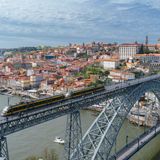
Most digital maps fail to explain that the Dom Luís I Bridge dictates your transit based entirely on altitude, creating two distinct pedestrian experiences. Crossing the lower deck connects the two riverbanks directly, keeping you at water level and shielding you from the city's steep inclines. Caves Burmester, founded in 1750, sits immediately next to the lower entrance on the Gaia side. You can walk straight from a lower-deck crossing into a tasting room without climbing a single stair, keeping your energy reserved for the cellars.
The upper deck represents a completely different logistical reality. Ascending from the Gaia quayside to catch a train on this upper level requires steep stair climbs or paying for a cable car transit. The vertical friction is relentless. Ignoring it means arriving at your first tasting exhausted or missing appointment slots entirely.
If you remain on the north bank, you bypass the bridge ascent to access central infrastructure. Staying near São Bento railway station puts you right beside its 20,000 historic azulejo tiles, which illustrate Portuguese history and transportation. Above-ground transit provides an alternative to the metro grades. These transport hubs eliminate the daily climb, but separate you entirely from the active wine maturation zones.
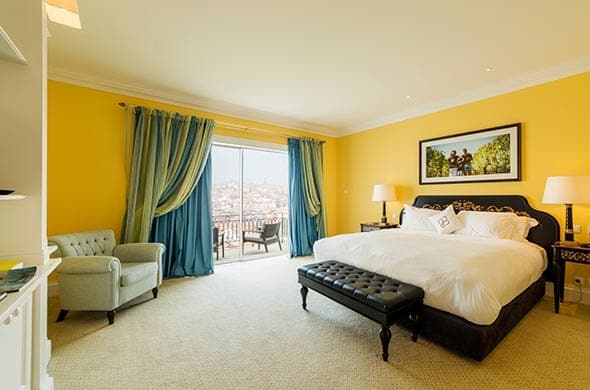
Basing yourself in Gaia trades bridge logistics for immediate lodge proximity. The hotel landscape on the south bank directly reflects this singular wine focus, often incorporating the industrial heritage into the accommodation. The Yeatman Hotel opened its doors in August 2010 and secured a Michelin star for its restaurant by November 2011. The property integrates deeply with the local industry; every guest room is sponsored by an individual Portuguese wine producer.
Newer properties continually convert the warehouse footprint into luxury lodging. Tivoli Kopke Porto Gaia Hotel opened recently in February 2025, adding modern capacity right among the aging barrels. Further inland, Hotel Forte de Gaia was constructed directly inside stone buildings that previously formed part of the massive Real Companhia Velha wine cellars.
The friction in Gaia is entirely vertical and vehicular. While waterfront tasting rooms sit conveniently at sea level, reaching the major historic lodges requires serious physical exertion. Graham's stores approximately four million bottles of port in its lodge at Rua do Agro 141.
You can avoid the hillside climbs entirely by focusing your days on the riverfront. Several producers operate quayside facilities that skip the formal, pre-booked cellar tour format in favour of immediate access. Small quayside tasting rooms have limited seating capacity, leading to congestion during peak afternoon hours, but they eliminate the vertical trek. Kopke runs a dedicated tasting bar on the Gaia waterfront at Avenida Diogo Leite 312. Just down the promenade at number 256, Quinta do Noval—operating since 1715—offers walk-in tastings without guided tours. Ramos Pinto maintains its own visitor lodge further along the same stretch at Avenida Ramos Pinto 380.
The density of the south bank allows for highly efficient itineraries that require minimal walking. Vasques de Carvalho opened its visitor lodge here in the summer of 2018, adding modern facilities to a dense cluster of historic heavyweights. Cockburn's operates out of massive lodge and historic cellar facilities constructed in 1890, representing the vast British influence on the trade. Conversely, Ferreira stands out as the only major historic port house originally founded and continuously owned by Portuguese families. If you prefer independent pacing over structured group walks, Fonseca is located at Rua do Choupelo 84 and provides self-guided museum tours for walk-in visitors.
When you base yourself in Porto areas and hotel trade-offs, you trade immediate lodge access for direct links to mainline rail, suburban trains, and metro routes. The trade-off is fundamentally geographic. Every visit to the Gaia wine cellars requires a planned descent to the Douro riverbank and an inevitable climb back against the northern slope at the end of the tasting day.
Down along the riverfront, Pestana Porto provides 48 rooms—33 with river views and 15 without. Because it operates without a full-service lunch or dinner restaurant, midday and evening dining requires stepping out into the surrounding district. Higher up in the urban grid, Hotel da Bolsa offers a central three-star base with 34 rooms arranged across six floors. Along the river bank approach at Rua de Miragaia 11, Porto Tile House offers an alternative lower-city position.
Choose Gaia when cellar visits and river views dominate the itinerary. Choose Porto when the trip also depends on north-bank restaurants, rail links and sightseeing.
Vincci Ponte de Ferro sits beside the upper deck of Dom Luís I Bridge, giving the quickest pedestrian or metro connection of these Gaia options.
The Yeatman and Vincci both sit above the waterfront, so descents still matter. If repeated hills are a concern, plan lodge visits in one block rather than crossing levels several times a day.