First visit, mixed plansBaixa, near Trindade or Bolhão
The airport metro, upper-city sights and the downhill walk to the river all work from here.
Think twice if: Waking beside the Douro matters more to you than easier days on foot.
31121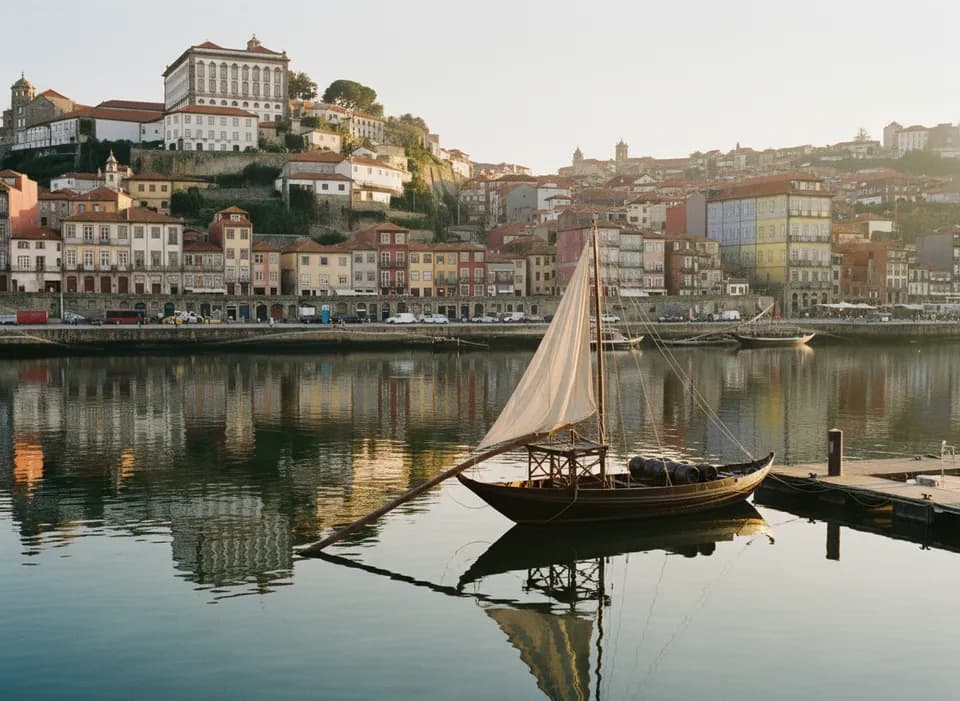
Ribeira puts the Douro at your door, but dinner often ends with a climb. Compare Porto neighbourhoods by the walks, trains and trade-offs that shape an ordinary day.
The short answer
For a first visit, Baixa around Trindade or Bolhão is the easiest all-round choice. Ribeira brings the river close but adds an uphill return. Cedofeita swaps postcard immediacy for galleries and an easier upper-city rhythm. Stay in Gaia only when the cellars and south-bank evenings are the point, not as if it were simply another Porto neighbourhood.
The airport metro, upper-city sights and the downhill walk to the river all work from here.
Think twice if: Waking beside the Douro matters more to you than easier days on foot.
31121You stay inside the UNESCO-listed centre and begin beside the Douro rather than travelling to it.
Think twice if: A steep or stepped return after dinner would make the location less workable.
21619It sits east of the busiest old-town streets while keeping Ribeira within walking distance.
Think twice if: You have one night and want the main sights immediately outside the door.
122Casa da Música and the Boavista avenue are close when your days keep taking you west.
Think twice if: Most of your time will be in Ribeira: the walk is long, with a sharp descent.
123The station connects with Porto São Bento services as well as Regional, Intercidades and Alfa Pendular trains.
Think twice if: You are choosing Porto chiefly for an atmospheric old-town doorstep.
148Rua de Cedofeita and the Bombarda side keep you in the upper city, west of the busiest Baixa streets.
Think twice if: You want the Douro or the cellars outside the door.
43The south bank puts the lodges and their riverfront on your side of the bridge.
Think twice if: Your days keep taking you back to Bolhão, Aliados or Trindade.
516Go deeper
This city page owns the broad base choice. Each supporting guide answers one narrower hotel, arrival or trip-shape decision in depth.
Neighbourhoods
There is no winning area. There is only the compromise you will mind least by the third day.
Across the river
Search results often fold both banks into "Porto". For the stay itself, the river is a boundary you may cross several times a day.
Choose the Porto side when most meals, stations and upper-city sights sit around Ribeira, São Bento, Aliados or Bolhão.
Trade-off: Cellar visits become bridge crossings, and the return from the Gaia waterfront can add another slope.
1619Choose Gaia when cellar appointments and south-bank evenings outweigh daily returns into upper Porto.
Trade-off: The postcard view is of Porto, but the hotel is in Vila Nova de Gaia and the upper-city sights remain across the river and uphill.
516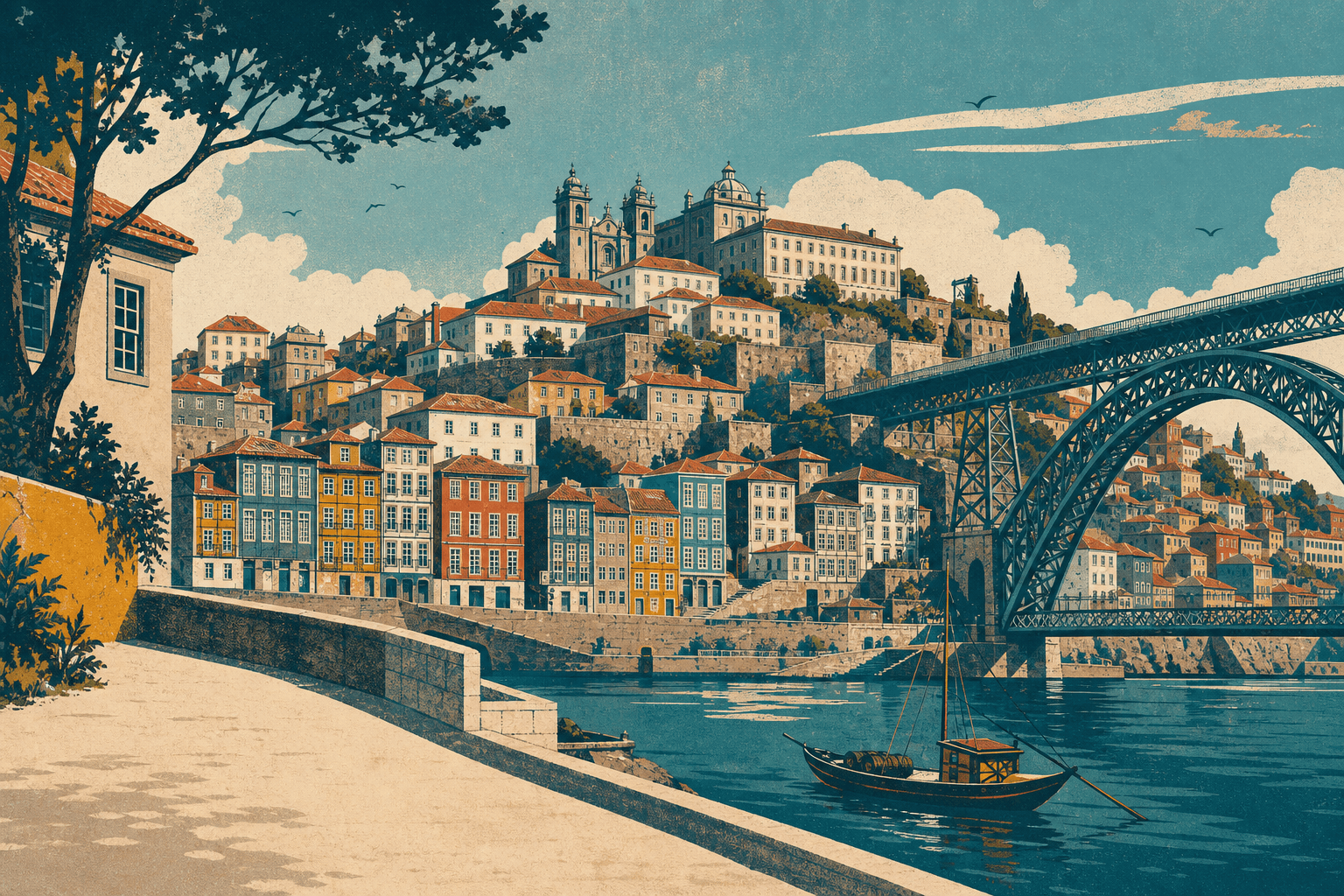
Measured routes
Porto is a city of short distances and real climbs. The riverfront can look close to the upper city while still making the walk home demanding. Distances and elevation are rounded; they do not tell you whether a route has steps or suits your mobility.
Pedestrian routes: Valhalla using OpenStreetMap data. Elevation: Open-Elevation samples along each route. Calculated 30 August 2026.
Mechanical hill links
Mechanical links can change a Ribeira stay, but only if they are running. Statuses change quickly, so check the operator or city page.
Ribeira, near the Luís I Bridge Lada viewpoint above the river
A free lift can remove part of one climb near the bridge, but it does not take you to Trindade or level the whole old city.
Ribeira Batalha
Do not pick a hotel assuming the funicular will remove this climb: the operator currently lists it as closed for maintenance.
By trip type
Arrival matters once. The walk or train you take every morning and evening matters more.
You can arrive on the airport metro, walk the upper centre and descend to the river without making every departure an uphill start.
Trade-off: You do not get the Douro immediately outside.
1121The location itself becomes part of the stay, especially early and late when day visitors thin out.
Trade-off: Budget energy or transport for upper-city returns.
219Campanhã handles national and urban trains; São Bento is the central stop for urban services.
Trade-off: Campanhã is useful for trains, but it does not feel like the Porto of postcards.
148A map distance cannot reveal kerbs, steps, entrance gradients or whether a hotel lift is working.
Trade-off: A neighbourhood name alone cannot tell you whether a stay will be accessible.
910Municipal street parking is zoned, time-limited and charged on published schedules, so settle parking before choosing the room.
Trade-off: "Parking nearby" is not the same as an on-site reserved space.
12The airport lists Line E for the city and taxis running around the clock. A central neighbourhood cannot conjure a pre-dawn metro.
Trade-off: Moving to a less useful area for the whole stay may save less trouble than booking the early transfer.
11Walking comparisons
These comparisons add walks that are not already owned by the measured hill profiles above.
Before you choose
Five details that can change which neighbourhood or hotel makes sense.
Porto’s municipal tourist tax is €3 per overnight stay, up to seven consecutive nights per person.
The municipality lists exemptions; check the official page for eligibility.
Metro Line E connects the airport with the city at a published 20 to 30 minute frequency; the airport also lists taxis around the clock.
For a pre-dawn flight, check the live metro timetable before choosing a hotel for that connection.
Porto’s paid street-parking zones run on published schedules, generally 09:00 to 19:00 Monday to Friday, with additional Saturday charging in Zone I.
Maximum stays vary by zone from two to ten hours. A hotel claim of "nearby parking" does not remove that constraint.
Visit Porto provides accessible tourism information and downloadable itineraries.
Use those official resources and verify the exact final approach; Folio's calculated routes are not accessibility audits.
Andante publishes contactless Visa and Mastercard travel on supported journeys.
Check the current validation rules and network coverage before relying on it as your only ticket method.
Then choose the hotel
These are distinct fits, not three interchangeable recommendations per neighbourhood. Areas with thin Folio evidence stay thin rather than being padded with an unverified name.
Hotel Dom Henrique is 300 metres from Trindade, with a direct metro link from the airport and to Campanhã.
Know first: It is a larger, functional city hotel rather than an intimate historic-house stay.
Read the hotel guide →Decanting Porto House places Bolhão metro about 100 metres away, so the address works without paying for riverfront immediacy.
Know first: This is a small two-star base; judge it on room facts rather than full-service expectations.
Read the hotel guide →Jardins do Porto occupies a restored house on Rua do Almada, keeping Aliados and Trindade within the upper-centre plan.
Know first: Choose it for scale and character, not the services of a large hotel.
Read the hotel guide →ICON Duplo Ribeira is on Rua São João in central Ribeira, on a pedestrian street near the Douro.
Know first: There is no confirmed on-site parking, and every upper-city return still comes with the low address.
Read the hotel guide →Porto Tile House has four studios with kitchenettes in a restored Miragaia building.
Know first: The small old building needs a room-access check if stairs or luggage are a concern.
Read the hotel guide →Torel 1884 occupies a historic palace on Rua Mouzinho da Silveira, between São Bento and the river streets.
Know first: The grander format and central address are a different proposition from a quiet residential guesthouse.
Read the hotel guide →Palacete Museu sits on Travessa de São Carlos, a short walk from Clérigos and the Cedofeita-side cultural streets.
Know first: It is an idiosyncratic small property; use the full guide to check which conventional hotel services are actually present.
Read the hotel guide →Menina Colina is on Rua Doutor Alberto Aires de Gouveia, west of the densest Baixa streets and close to the arts-and-museums side.
Know first: It is a guesthouse rather than a staffed full-service hotel.
Read the hotel guide →Maison des Amis is on Rua da Restauração, useful for the western historic edge and the walk towards the river.
Know first: This is the Miragaia-facing edge of the choice, not the heart of Rua de Cedofeita.
Read the hotel guide →Pur Oporto is at Rua de Santa Catarina 946, beyond the busiest shopping stretch but still linked to Trindade and Bolhão.
Know first: The precise address matters: this is the northern Bonfim edge, not São Lázaro.
Read the hotel guide →Charm Palace sits near Santa Catarina and Bolhão in a historic building with rooms split across parts of the property.
Know first: Some units have stair-only access, so the room allocation matters more than the general location label.
Read the hotel guide →Hotel Douro is on Rua da Meditação by Praça da Boavista, making it the clearest location-led choice for this area.
Know first: The hotel evidence also contains a stair-only room warning; check the exact room before treating the address as effortless.
Read the hotel guide →Hotel Vice Rei is on Rua Júlio Dinis, close to the Boavista roundabout and west-side transport.
Know first: Its current Folio evidence is stronger on location than on detailed room distinctions.
Read the hotel guide →Predicados do Douro Palace is on Rua de Dom Manuel II, fitting travellers whose Boavista choice leans towards the gardens and western centre.
Know first: It sits on the eastern edge of the broader Boavista choice, not beside Casa da Música.
Read the hotel guide →Official city, tourism and transport pages support the practical details. Folio calculates walking routes with Valhalla, OpenStreetMap and Open-Elevation. Every suggested hotel links to current Folio research.
Practical details come from official city and transport sources. Walking distances follow pedestrian routes, and elevation figures are sampled and rounded. These calculations cannot tell you whether a route is step-free or right for you.
Last evidence refresh: 30 August 2026