Best for Regional Day Trips
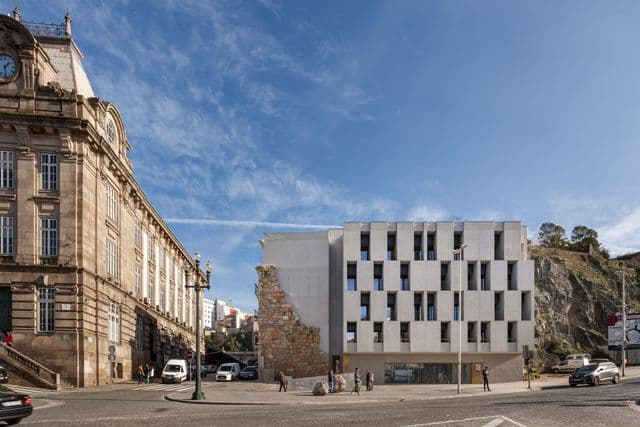
S. Bento Residences
€€€ · UpscaleTravellers taking repeated Douro or Braga trains who also want central evenings.
Pick the station that removes the worst transfer from your actual rail itinerary.
Folio earns a commission if you book through these links, at no extra cost to you. How we earn from links
 Travelers at ticket machines inside São Bento Railway Station, Porto.
Travellers taking repeated Douro or Braga trains who also want central evenings.
Early Lisbon departures, late arrivals and travellers carrying heavy bags.
| Option | Best for | Why choose it | Trade-off | Access |
|---|---|---|---|---|
| São Bento Terminus Base (S. Bento Residences / Condes de Azevedo)Central historic terminus | Day-trippers taking regional trains to Douro Valley, Guimarães, or Braga who want immediate evening access to Porto dining. | Station exits directly into the historic centre; zero transit needed to reach Rua das Flores, Clérigos, and central wine bars. | Long-distance Alfa Pendular trains to Lisbon terminate at Campanhã; requires a 4-minute urban connection train. | Direct access to Metro Line D and Porto suburban rail network.As of Checked 1 September 2026Checked 1 Sept 2026Sources12 |
| Campanhã Intercity Base (Hotel Poveira / Porto Antas)Intercity rail junction | Travellers catching early morning high-speed trains to Lisbon or carrying multi-piece heavy luggage. | Direct boarding for all Alfa Pendular and Intercidades services without transferring luggage across station levels. | Located in an eastern transit district; takes an 8-minute metro ride or 35-minute walk to reach the historic core. | Major transit hub connecting all metro lines (A, B, C, E, F) and national rail lines.As of Checked 1 September 2026Checked 1 Sept 2026Sources12 |
Choosing a hotel adjacent to São Bento versus Campanhã changes how you handle train departure times and luggage.
Places the regional platforms opposite the hotel while keeping historic-centre dining at the door.
Cuts the departure-day luggage transfer to a short walk from the mainline platforms.
The geographical divide between the city's two primary railway stations directly mirrors the functional divide in Portuguese rail operations. Built squarely into the central downtown district and opened in 1916, São Bento handles suburban commuter trains alongside standard regional services. If your itinerary involves scenic day trips pointing north and east—specifically to Braga, Guimarães, and the Douro Line—this terminal serves as the actual starting line for your journey.
Long-distance and mainline trains arriving from major cities simply do not terminate at these downtown platforms. To access the broader country, passengers must pass through Porto Campanhã. It anchors the vital North Line connecting south to Lisbon, as well as the cross-border Minho routes stretching towards Spain. Anyone trying to decipher where to stay in Porto strictly for rail logistics faces a hard, binary choice between these two facilities.
You either sleep near the regional starting blocks downtown to optimise for local northern excursions, or you accept the industrial perimeter of the eastern junction to eliminate a highly stressful early morning connection. For connecting train passengers holding a valid long-distance ticket, the transfer rail transit between Campanhã and São Bento costs nothing. It does, however, consume valuable time and physical energy. Making the wrong base choice means adding thirty minutes of useless transit to every single day of your trip.

Booking a room within a ten-minute walk of the downtown terminal means you can confidently step onto the platform just minutes before departure. São Bento station’s cavernous main hall features over 20,000 traditional blue-and-white Portuguese azulejo tiles lining its walls, but for passengers with a tight schedule, its daily value is purely operational. Commuter trains originate at these specific platforms, ensuring you secure a seat before the carriages fill up with locals at subsequent stops.
The Douro Line timetable requires tighter discipline and heavily punishes anyone sleeping across town. Committing to a Douro Valley day trip requires significant time on the rails; the line connects to Régua in 1 hour 50 minutes, reaches Pinhão in 2 hours 40 minutes, and eventually terminates at Pocinho. Adding a commuter connection from an eastern hotel just to reach your departing train at São Bento compounds that friction exponentially. The Minho Line similarly demands a long block of the day, pushing north to reach Viana do Castelo in under three hours before continuing onward across the border to Vigo, Spain. A downtown base cuts unnecessary transit fat out of the morning timeline, letting you sleep later and walk straight to the train after a local breakfast.
Travellers executing a rapid, multi-city Portuguese itinerary operate on a totally different rhythm. When the core objective is striking south towards the capital, Campanhã becomes the inevitable choke point for the entire network. Intercidades long-distance trains connect key cities such as Lisbon, where to stay in Porto, and Braga on a daily schedule. These standard mainline units provide spacious seating alongside free Wi-Fi and a dedicated buffet bar. The premium Alfa Pendular high-speed trains upgrade the transit experience entirely, operating with onboard meals, advanced entertainment systems, and dedicated restrooms. Catching an 06:00 Alfa Pendular departure from a boutique property in the downtown core forces an awkward, pre-dawn transit connection through a silent city.
Sleeping immediately adjacent to the eastern rail yards eliminates that morning variable completely. The infrastructure on this side of the city was historically built for heavy mainline utility. Southward rail traffic relies on specific historical infrastructure; the original river crossing was established when Gustave Eiffel’s company built the Ponte de Dona Maria Pia for single-track railway in the late nineteenth century, before the modern Ponte de São João replaced it in 1991. Across the water, the Vila Nova de Gaia-Devesas station, which opened in 1863, serves the south bank of the Douro River. You book a room on the eastern perimeter strictly to access these rapid southward connections without dragging a suitcase over miles of historic paving stones.
Moving heavy bags across local rail infrastructure exposes practical friction that promotional brochures ignore. At Campanhã, track layout dictates physical effort. Transfers between platform 1 and platforms 2 through 9 require navigating steps or elevators via an underground subway tunnel. When an arriving train disgorges hundreds of passengers simultaneously, queues at the lift shafts create immediate bottlenecks. Missing a connection because an elevator was packed with luggage carts is a real risk. Inside the terminal itself, Campanhã provides straightforward utility. The station offers passenger amenities including luggage storage facilities, a ticket office, and retail shops.
Connecting onwards into the city centre adds another layer of bag-handling. While the urban transfer rail transit between Porto Campanhã and São Bento is free for connecting train passengers, shifting heavy luggage down through the subway tunnel, boarding the shuttle, and debarking downtown consumes serious physical energy. Choosing a hotel beside Campanhã spares you that intermediate transfer entirely.
Arriving downtown at São Bento introduces different structural hurdles. Major exterior construction at the terminal shifted the main passenger entrances to either side of the building as of July 2025. Navigating these detours and narrow pedestrian diversions with rolling luggage requires patience during morning rush periods. For early arrivals before accommodation check-in times, the station features luggage lockers off the main hall, including both coin-operated and card-operated lockers. Depositing bags at the terminal provides temporary relief, but hauling those same heavy cases from the station up steep cobblestone streets to your room remains an unavoidable physical tax. Selecting the right station base ultimately dictates how many times you must lift your suitcase.
A hotel base at Campanhã trades evening vitality entirely in exchange for morning efficiency. The commercial streets immediately surrounding the eastern railway junction shutter early, offering very little to wandering visitors after dark. Downtown, the urban rhythm easily holds until midnight. The Time Out Market situated directly at the south end of São Bento station operates daily from 10:00 am to midnight. Accepting card payments only, this massive food hall provides immediate, highly varied dining exactly where regional trains terminate, letting exhausted passengers step off a delayed Douro Line carriage and walk straight into a hot meal.
The boutique accommodation density directly mirrors this stark atmospheric shift. Plant-based diners focusing on regional train excursions should consider Jardins do Porto, which offers a Chef's signature vegan menu on site.
Campanhã Intercity Railway Station São Bento Central Terminus
Spinner workable with care
Connecting between Campanhã and São Bento takes 4 minutes via dedicated urban rail on Linha do Norte / Linha do Minho, with step-free lift access to all platforms.
Campanhã is the practical base for an early Lisbon departure because it removes the local connection from São Bento and shortens the luggage transfer.
São Bento is the more convenient base for repeated regional trips and keeps restaurants in the historic centre close when you return.
Hotel Poveira is about 150 metres from the Campanhã entrance. S. Bento Residences is directly opposite São Bento, but central Porto’s slopes still matter elsewhere in the journey.