Guides / San Sebastián
Head-to-headSan Sebastián, Spain43.3183, -1.98123 Sept 2026

Gros vs Centro San Sebastián: Where to Stay by Trade-off

Choose Gros for effortless surfboard handling and casual pintxo terraces, or Centro for Belle Époque elegance and sheltered La Concha promenading.

Folio earns a commission if you book through these links, at no extra cost to you. Learn more

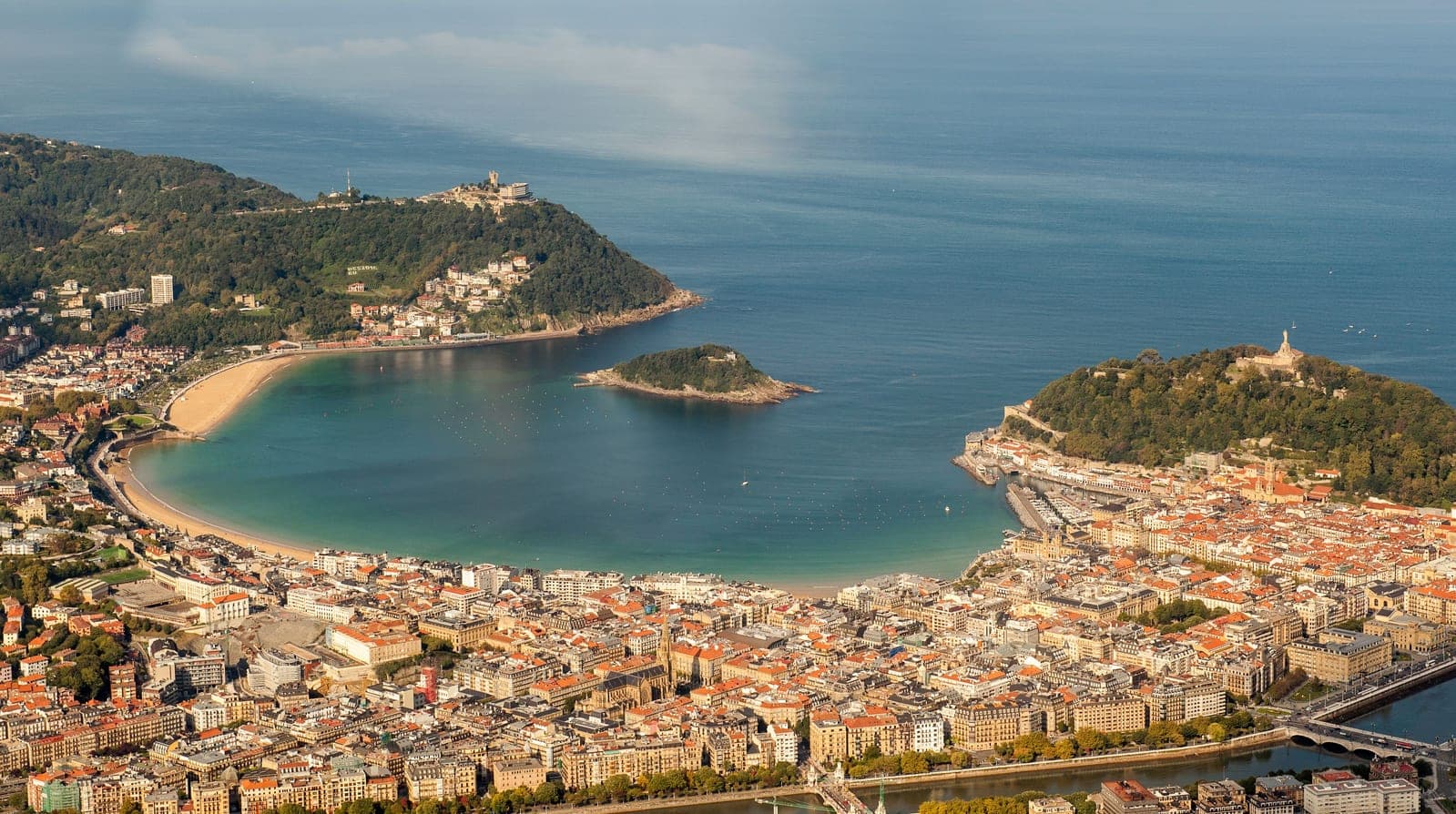
A stunning aerial view of La Concha Bay, San Sebastián, with lush hills and cityscape.A stunning aerial view of La Concha Bay, San Sebastián, with lush hills and cityscape.

Base east of the river in Gros for immediate access to Zurriola's surf breaks and casual pintxo streets. Book Centro to the west if your itinerary revolves around the sheltered La Concha promenade and 19th-century architecture.

The Core Dilemma: Board Handling at Zurriola vs. 19th-Century Promenading

A stunning aerial view of La Concha Bay, San Sebastián, with lush hills and cityscape.A stunning aerial view of La Concha Bay, San Sebastián, with lush hills and cityscape. — luis Peralta — Pexels

San Sebastián sits on the Bay of Biscay in the Basque Country, positioned approximately 25 kilometres from the French border and regional neighbours like Hondarribia. The city is physically bisected by the Urumea River, creating two distinct central districts that cater to entirely different daily routines. East of the water, the Gros neighbourhood is defined by La Zurriola Beach. This open surf beach serves as a worldwide gathering spot for boardriders, local sports enthusiasts, and sunset viewing. The culture here is distinctly casual, built entirely around immediate, flat walking access to the exposed surf breaks.

West of the river, Centro forms the city's Romantic Area, which was developed following the demolition of the historic defensive city walls. The aristocratic tone of this western district was cemented in the late 19th century. During this era, Queen Maria Cristina of Austria selected San Sebastián as her regular summer residence, accelerating its development into a high-end resort. The area centres on elegant European architecture, commercial shopping boulevards, and the sheltered promenade along La Concha Beach. Choosing a base in San Sebastián hotel-area guide forces a hard decision between water sports infrastructure and European elegance.

Urban Geography and the Urumea River: Factoring Bridge Friction into Daily Routines

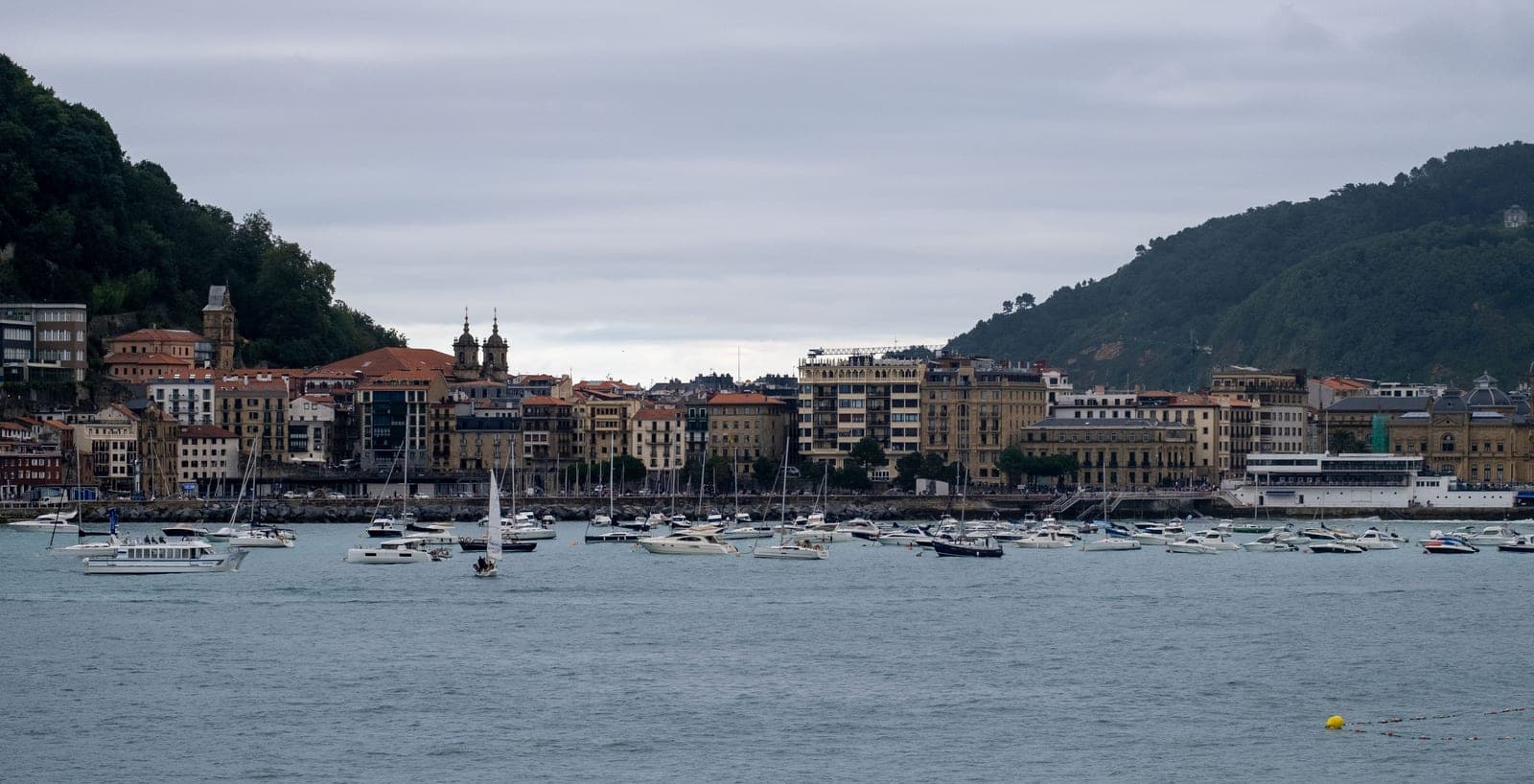
Boats anchored in the picturesque harbor of San Sebastián with a backdrop of historic buildings.Boats anchored in the picturesque harbor of San Sebastián with a backdrop of historic buildings. — Joost van Os — Pexels

The Urumea River serves as the physical divide splitting San Sebastián into distinct eastern and western sectors. Connecting these halves requires crossing one of several historic spans, notably the Santa Catalina Bridge and the 1921 Zurriola Bridge, recognised for its Art Deco streetlamps designed by Víctor Arana. On paper, crossing from Centro into Gros takes mere minutes on foot across the Kursaal Bridge, or via urban bus route Line 14 and local commuter rail. In practice, that brief water crossing dictates the daily rhythm and convenience of your stay.

For surfers, river crossings represent genuine logistical friction. Hauling a heavy board and dripping wetsuit across the exposed pavements of the Zurriola Bridge or Santa Catalina Bridge against stiff coastal wind quickly becomes tiresome. Doing that crossing twice a day between a Centro hotel room and the breaks at Zurriola turns an easy morning session into an awkward equipment transfer. Basing in Gros eliminates that transit entirely, letting you walk straight off the sand into your lobby without negotiating pedestrian bridge traffic in damp neoprene.

Western bases suit travellers whose itineraries focus on dining and promenade walking rather than early swell reports. Parte Vieja sits directly at the base of Mount Urgull, wedged between the Urumea River estuary and the commercial fishing port. Staying west means historic tapas streets and sheltered bay walks sit right outside your door, leaving river crossings as an occasional architectural stroll rather than a mandatory gear haul. Deciding where to sleep comes down to which side of the Urumea your primary daily activity begins and ends.

Beach Profiles: Open Atlantic Breaks at Zurriola vs. Sheltered Calm along La Concha

The water conditions strictly segregate the two coastal fronts and dictate how each neighbourhood functions day to day. In Gros, La Zurriola Beach faces the raw force of open Atlantic breaks without any natural barrier. It operates as an established worldwide gathering spot for surfers, local sports, and evening sunset viewing. The exposed orientation generates steady wave action, making the sand an energetic hub for board riders and spectator crowds. It is not, however, built for quiet floating or casual wading. Swimmers must negotiate real swell and active surf zones, making Gros the logical base for board sports but less accommodating for relaxed dipping.

Across the river in Centro, La Concha Beach delivers a contrasting shoreline. The bay sits sheltered naturally by surrounding coastal mountains and Santa Clara Island, keeping the water tranquil and protected from open swell. Daily life centres along the scenic Kontxa Pasealekua boardwalk overlooking the island and mountain ridge. Swimmers who prioritise calm, flat water without navigating breaking sets will find La Concha far superior. The trade-off is absolute: surfers will find zero rideable waves inside the bay, meaning Centro trades direct break access for refined promenade strolls and gentle swimming.

Seasonal timing also shapes how both waterfronts perform for different activities. Surfers planning an extended itinerary can also branch out beyond city limits. Plum Guide notes that Zarautz lies approximately 20 minutes by car west of San Sebastián, featuring the longest coastal beach in the immediate region. That makes a morning trip to Zarautz a practical excursion when you want broader sand or varied coastal swell.

Accommodation Logistics: Surf Base Functionality in Gros vs. Refined Stays in Centro

Securing accommodation in either district requires navigating a heavily constrained local housing market where travellers must rely primarily on established hotels. Gros properties prioritise pragmatic access to the eastern waterfront and transit hubs.

For surfers flying in with heavy gear, Hotel Arrizul Congress positions guests a brief seven-minute walk from both the train station and the new bus station, acting as a highly functional base with direct buses running straight from Biarritz Airport and offering complimentary water and soft drinks in the minibar for post-travel recovery.

Across the river in Centro, hotels lean heavily into historic conversions and promenade frontage.

Centro houses several varied operations. Hotel Catalonia Donosti runs a four-star hotel inside a restored 17th-century convent, offering a rooftop pool a ten-minute walk from the beach. Pensión Aristizabal serves as a more economical six-room guest house situated on Plaza de Bilbao. At the luxury end, Lasala Plaza Hotel operates as an adults-only boutique property directly overlooking the Bay of Biscay and La Concha beach. If arriving by car and heading east rather than into Centro's permit zone, the simplest reference point for navigation is the Kursaal Congress Centre.

Dining and Street Life: Gros Pintxo Terraces vs. Centro Boulevards and Old Town Access

The street-level atmosphere changes immediately upon crossing the river. Gros centralises its dining scene along pedestrian corridors, notably Peña y Goñi and Zabaleta streets. These avenues host dense concentrations of pintxo bars and pavement terrace cafés, fostering a casual, modern culture heavily influenced by the adjacent beach. The neighbourhood houses long-established culinary institutions like Bar Bergara, founded by Patxi Bergara in 1950 and located at General Artetxe Kalea, 8. A few blocks away, Bar Lurrina operates at Padre Larroca Kalea, 4. This eastern district provides immediate access to post-surf dining without the need to dress up.

Centro offers an entirely different urban fabric. Its eastern edge is defined by modern cultural infrastructure, highlighted by the Kursaal Congress Centre in Gros just across the water. Designed by Rafael Moneo as a pair of translucent cubes anchoring the waterfront, the Kursaal serves as the primary venue for the San Sebastian International Film Festival (Zinemaldia) and Jazzaldia.

Moving deeper into Centro, the Belle Époque shopping avenues eventually give way to Parte Vieja. From the historic religious monuments here, the distance to the Cathedral of the Buen Pastor in the middle of Centro is approximately one kilometre. Within the Old Town, Plaza de la Constitución—locally called the 'Consti'—acts as the historic gathering square for major municipal festivities. Visitors should anticipate severe logistical friction during meals, as pintxo bars and popular dining streets in Gros and the nearby Old Town face intense congestion during peak summer weekends.
Decision Matrix: Historical Excursions, Aquarium Visits, and Final Base Selection

For day trips beyond the immediate urban core of San Sebastián, the San Marcos Fortress provides a historical military fortification situated 10 kilometres outside the city limits in Rentería. Reaching the fort requires dedicated regional transport or driving, contrasting sharply with the self-contained walkability of the central beaches.

When swell collapses or coastal rain sets in, indoor maritime stops provide practical shelter. The San Sebastián Aquarium serves as an accessible bad-weather alternative at the harbour edge, charging €14 for adult admission and €7 for children. Basing in Centro places this waterfront facility within an easy, flat walk along the bay, sparing you the exposed river crossings when Atlantic winds sweep over the Urumea bridges.

Its single rooms feature a private bathroom, air conditioning, free Wi-Fi, a Nespresso coffee machine, and a mini-bar. These rooms offer several distinct view configurations: guests can select views over Plaza Zaragoza itself, standard city street views, an interior patio, or a terrace overlooking an enclosed block patio. Opting for an interior patio or block courtyard view cuts out street-level morning noise, whereas plaza-facing windows look directly onto the district's manicured public gardens.

Your choice between these two quarters comes down to equipment friction and personal tempo. Base in Gros if your mornings start on the sand and you require immediate Zurriola wave access without carrying boards across town. Settle in Centro if your priority is sheltered walking routes along La Concha, elegant 19th-century boulevards, and low-effort connectivity to transit hubs.

Hotel-base implications

What the base choice changes

01

Positions you a seven-minute walk from the Biarritz Airport bus arrivals for zero-transit-friction access to Zurriola.

Best for
Surfers flying in with heavy gear
Trade-off
Requires walking across the Kursaal bridge to reach the Belle Époque shopping avenues of Centro.
Checked 1 Sept 2026Sources1
02

Places you directly on the La Concha promenade but requires navigating the low-emissions zone permit system if arriving by car.

Best for
Direct Bay of Biscay promenade views
Trade-off
Creates daily friction if you intend to carry surf equipment back and forth to Zurriola Beach.
Checked 1 Sept 2026Sources12
Gros vs Centro: Base Comparison — Compare the core utilities of San Sebastián's eastern and western districts.
OptionBest forWhy choose itTrade-offAccess
GrosImmediate open-water surf accessRemoves the daily friction of carrying wetsuits and boards across the Urumea river bridges.Faces heavy pedestrian congestion along pintxo corridors like Zabaleta during peak summer weekends.Accessible on foot via the Kursaal Bridge, urban bus Line 14, or local commuter rail.Checked 1 Sept 2026Sources1
Centro (Romantic Area)Belle Époque architecture and promenade strollingOffers a flat one-kilometre walk to the historic religious monuments of Parte Vieja.La Concha lacks open breaks for surfing, and navigating a vehicle requires a low-emissions zone permit.A short walk from the central train station across the Urumea River bridges.Checked 1 Sept 2026Sources12
The decision
Surfing Zurriola dailyGros — skip hauling a wet board across the crowded Urumea bridges.
Traveling with a vehicleGros — or prepare for Centro's strict low-emission permit zone and $30 nightly parking fees.
Prioritizing calm swimming watersCentro — La Concha is protected by Santa Clara Island, avoiding Zurriola's hazardous rip currents.
Booking self-catering apartmentsNeither — a 2023 municipal ban severely restricts new tourist rentals in both districts; rely on hotels.
Direct answers

Frequently asked questions

How do pedestrians and public transit cross between the districts?

Gros is accessible from Centro on foot across the Kursaal Bridge, via urban bus route Line 14, or by local commuter rail.

Why does the city centre feature a modern grid rather than narrow historic alleys?

San Sebastián was liberated by allied British and Portuguese forces on August 31, 1813, during which the historical city was burnt down, necessitating entirely new construction.

Are self-catering holiday rentals easy to find near the beaches?

No. A formal municipal moratorium on issuing new tourist apartment permits was instituted in San Sebastián in 2023, forcing most visitors to rely on established hotels.

When is the best time to visit for water sports without the congestion?

May and September are optimal months to visit San Sebastián, offering warm sea conditions and reduced crowds compared to peak summer.

Are there driving restrictions for foreign vehicles entering the city?

Yes. San Sebastián is a low-emissions destination requiring formal permits to circulate vehicles within central zones.

Check availability — Hotel Arrizul CongressSearch all San Sebastián hotels →