Guides / San Sebastián
Head-to-headSan Sebastián, Spain43.3183, -1.98123 Sept 2026

La Concha beachfront hotels vs second row San Sebastián

Direct promenade rooms charge double for bay views and morning noise. Moving one street back cuts your rate in half while keeping you steps from the sand.

Folio earns a commission if you book through these links, at no extra cost to you. Learn more

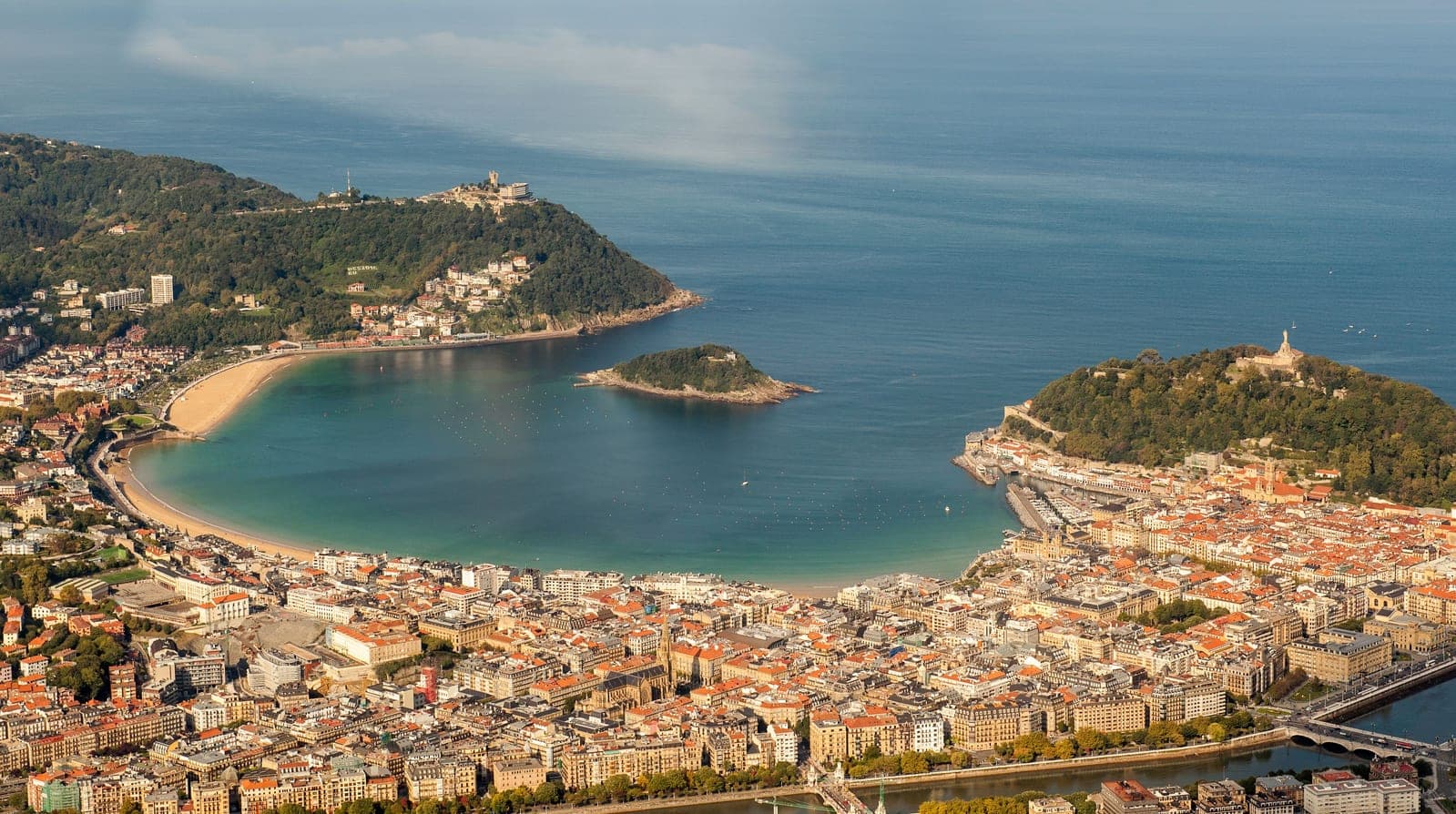
A stunning aerial view of La Concha Bay, San Sebastián, with lush hills and cityscape.A stunning aerial view of La Concha Bay, San Sebastián, with lush hills and cityscape.

Direct promenade rooms charge double for bay panoramas, while moving just one street inland cuts your lodging cost in half and guarantees quiet sleep just steps from the sand.

The bay window commands a massive premium over inner-block efficiency

A stunning aerial view of La Concha Bay, San Sebastián, with lush hills and cityscape.A stunning aerial view of La Concha Bay, San Sebastián, with lush hills and cityscape. — luis Peralta — Pexels

La Concha beach stretches across 1,300 metres of fine golden sand, establishing the physical and economic edge of the city. Accommodations positioned directly on this curve dominate the premium market, charging strictly for unobstructed maritime sightlines. Nobu Hotel San Sebastián operates as a five-star property inside the renovated Palacio Vista Eder. Designed by architect Francisco Urcola, the building deploys just 17 guest rooms and a rooftop pool to secure extreme privacy directly on the water. Further along the main promenade, Hotel Villa Favorita occupies an original 19th-century estate situated right on the sand perimeter. Away from the immediate beachfront curve, Hotel Maria Cristina operates at República Argentina Kalea, 4, representing another peak in the local luxury market.

These front-row properties sell uninterrupted panoramas and demand a heavy premium for the horizon. Moving just one street inland completely changes the financial equation. Hostal Bahía San Sebastián sits squarely on the second line of the beach, placing guests steps from the water without the heavy waterfront rate hike. The choice rests entirely on whether paying double the nightly rate for daytime scenery outweighs the economic efficiency of sleeping one block back. A 60-second walk separates the most expensive beds in the city from highly practical alternatives.

Second-row courtyards block promenade sweepers and delivery vans

The acoustic environment changes drastically across a 50-metre distance. Front-line properties face the historic promenade railing designed by Juan Rafael Alday at the beginning of the twentieth century. This waterfront spine, anchored by the 1912 La Perla Thalassotherapy centre, acts as a primary pedestrian and maintenance artery from dawn until late evening. Rooms directly facing the water catch the early morning street-sweeping crews, delivery vehicles servicing the spa, and consistent pedestrian movement.

Dropping back provides immediate acoustic shielding. Second-row buildings rely on interior courtyards rather than street-facing facades to manage the dense urban layout. Light sleepers should bypass the promenade entirely and book Hostal Bahía San Sebastián for total acoustic isolation.

The property's interior standard rooms feature a double bed with a window facing a small inside yard rather than the street. You sacrifice natural light, but gain total isolation from the city's early maintenance schedule. Travellers seeking modern climate control and quiet nights near the water find high value at Zaragoza Plaza.

Single rooms here provide a choice of perspectives, ranging from Plaza Zaragoza and city views to interior patios or terraces overlooking a block courtyard. Booking the interior aspect guarantees the quietest night available in the coastal district. The architectural density of these inner blocks naturally deadens the noise drifting up from the seafront.

Inland streets trade open horizons for shaded privacy

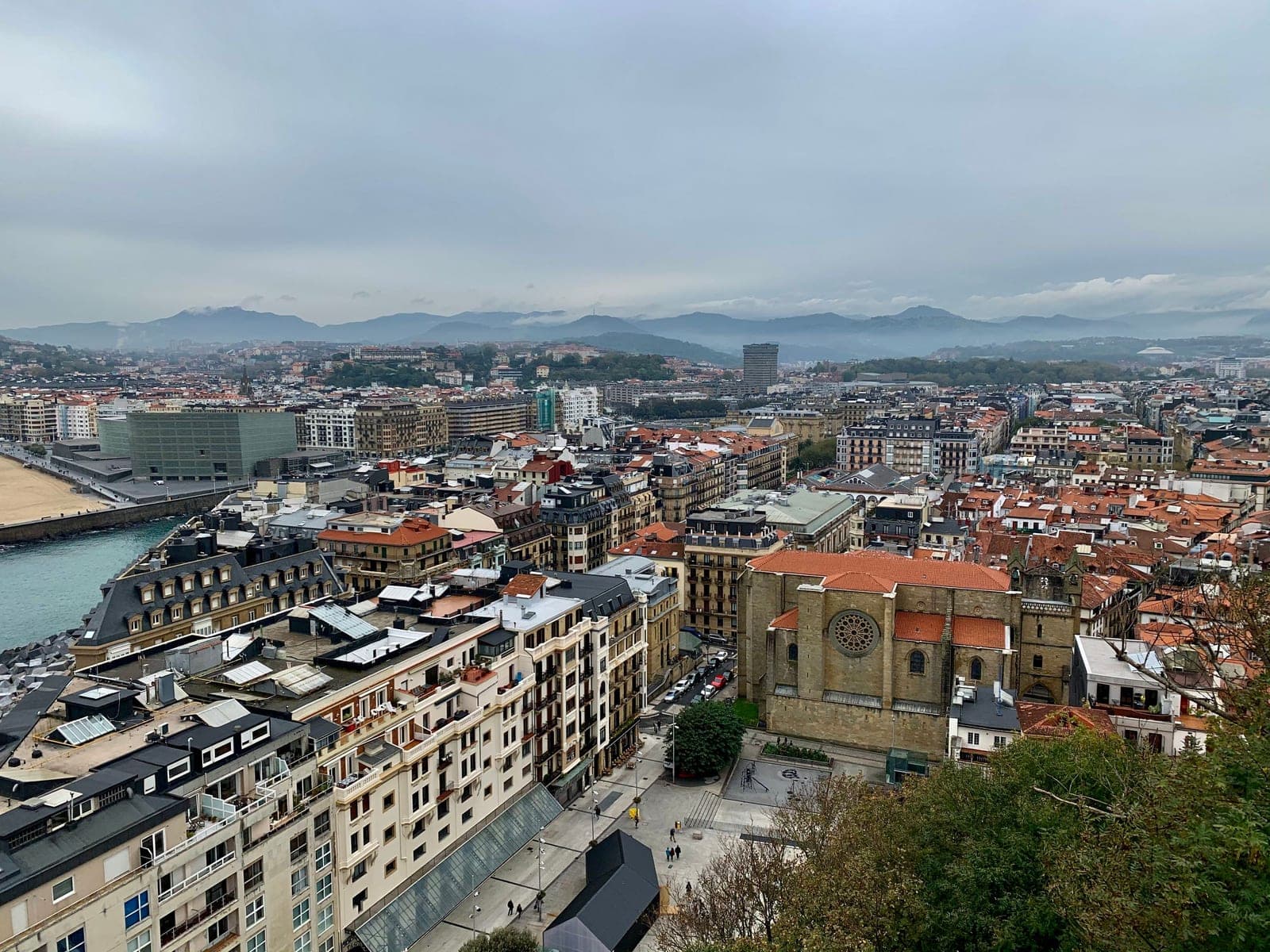
Aerial view of San Sebastián, Spain with overcast skies and visible mountains.Aerial view of San Sebastián, Spain with overcast skies and visible mountains. — Egor Kunovsky — Pexels

Waterfront architecture along the bay is arranged to capture unobstructed daylight. Front-row lodging absorbs intense morning sun and maritime glare reflecting off the water. The Seafront Luxury Studio fits just 21 square metres into a one-room rental for up to two guests directly on La Concha Beach, relying on its direct bay orientation for continuous light exposure. While panoramic exposure illuminates tight footprints, it also creates unrelenting brightness that requires drawing heavy blinds by midday to manage the coastal glare.

Inland lodging trades those open horizons for shaded enclosure. Because second-line streets are packed closely together, multistory facades block direct solar angles. La Concha Pearl Beach Apartment spans 45 square metres for two guests and sits 650 metres from the San Martin Azoka Indoor Market, relying on narrow street gaps rather than wide bay skies for ambient illumination.

That lack of natural glare delivers a practical sleep benefit for light-sensitive travellers. Properties inland focus their investment on interior fittings rather than exterior vistas. At Zaragoza Plaza, the single room provides a private bathroom, air conditioning, free wifi, a mini-bar, and a Nespresso coffee machine. Choosing between these environments comes down to daily habits. If you spend daylight hours outdoors and only need a room for sleeping, paying a premium for bay brightness yields little practical return.

Urban low-emission zones complicate beachfront luggage drops

Reaching your bed with luggage requires navigating municipal transit rules. San Sebastián is a low-emissions destination, operating an urban low-emission zone across its core. Driving a vehicle along central beach and promenade streets requires a valid permit to circulate. For self-driving travellers or anyone arriving by rental car, this regulatory boundary turns an arrival into an administrative hurdle.

First-time visitors wanting traditional coastal scenery and a direct horizon should book Hotel de Londres y de Inglaterra.

This property does not let you simply pull a car up to the front doors without prior authorisation. To manage the transit restrictions, it explicitly instructs guests using GPS navigation to enter Plaza Zaragoza 1, 20007 San Sebastián rather than its seafront facade address, routing vehicles away from the restricted perimeter. Trying to reach the front entrance by car without an approved permit risks traffic penalties. You unload on an interior square, haul bags around to reception, and surrender door-to-door vehicle access in exchange for the view.

Second-row hotels largely bypass this operational headache. Hostal Bahía's official address at San Martín, 54 bis places it on an established inner street. Navigating the broader San Sebastián hotel-area guide road network is noticeably simpler when your destination sits on a standard municipal corridor. Taxis and private cars approach without negotiating the tightest coastal restrictions.

La Concha beachfront hotels vs second row San Sebastián: structural differences dictate your budget

The physical divergence across these two accommodation zones reveals two distinct approaches to urban space. Front-line properties demand substantial capital for sea-facing glass and heritage preservation. Hotel de Londres y de Inglaterra operates from its historical address at Zubieta Kalea, 2, dividing over 150 years of history across 166 rooms in nine distinct categories. Staying here secures a legacy footprint right on the sand, but ties your daily movements to the busiest pedestrian artery in the region.

Stepping inland shifts the financial equation without entirely sacrificing historic character. Hotel Zenit Convento San Martín operates inside a converted 1887 convent situated two blocks back from La Concha Beach, proving that period masonry exists away from the water. For visitors prioritising central utility over water vistas, Hostal Bahía operates within the romantic area right in the town centre. A few paces away, Zaragoza Plaza is officially registered under code HSS00642 as a functional, street-level base just steps from the sand.

Civic infrastructure also anchors itself away from the immediate beachfront. The official tourism office of Donostia / San Sebastián operates at Ijentea, 1, situating vital visitor services just behind the primary coastal strip. If morning water panoramas are secondary to uninterrupted rest and preserving funds for the city's pincho bars, sleeping one or two streets inland delivers the practical advantages of the waterfront without the promenade surcharge.

Port peripheries and apartment blocks offer multi-room utility

The western promenade arc is not the sole route to water-facing accommodation. Moving east to where the Old Town borders the fishing port shifts both the street atmosphere and the perspective across the water. At Plaza Lasala, 2, Lasala Plaza Hotel dates to 1917, distributing its rooms between views over the historic plaza and direct outlooks onto the sea, alongside a partnership with La Perla Wellness Centre. Just beside it, SANSEbay Hotel opened in 2017 to overlook both the port basins and the wider sweep of La Concha Bay, combining traditional hotel rooms with serviced apartments.

This northern harbour corner trades continuous beachside vehicular traffic for maritime activity. The port contains the San Sebastián Aquarium, which occupies a 1928 building featuring an oceanarium with a 36-metre transparent tunnel. Staying on this perimeter places you near maritime sights rather than the exposed pedestrian promenade, softening the morning delivery noise without giving up the horizon.

When travelling as a group, private rentals adjust the price equation against multi-room hotel bookings. A residential rental flat on Calle Zubieta was listed at €1,600 per month including utilities, establishing the baseline cost for second-row residential streets. Groups wanting varied footprints can look to Ortzimuga - Basque Stay, an 86-square-metre property, or the Maskortxo apartment, a 79-square-metre rental accommodating five guests located a 19-minute walk from the Maria Cristina Bridge. The 46-square-metre Breathtaking Terrace Views In Luxury Apartment fits four guests, while Marina Confort -Kontxa Beach- accommodates three guests with an outdoor sun terrace. These setups give families dedicated space that standard promenade rooms rarely provide.
Hotel-base implications

What the base choice changes

01

Commits you to navigating the city's low-emission zone and morning street noise to secure classic, unobstructed bay views.

Best for
First-time visitors wanting traditional coastal scenery.
Trade-off
Requires mandatory vehicle circulation permits and commands high peak rates.
Checked 1 Aug 2026Sources12
02
Second-row interior

Hostal Bahía San Sebastián

Trades natural sunlight for absolute acoustic isolation from the busy seafront.

Best for
Light sleepers and budget-conscious travellers.
Trade-off
Standard interior rooms face small, dark inside yards.
Checked 1 Aug 2026Sources1
03
Block courtyard

Zaragoza Plaza

Uses interior patio configurations to guarantee quietness adjacent to the romantic area.

Best for
Travellers wanting modern climate control near the water without promenade prices.
Trade-off
Views are heavily restricted unless booking a Plaza-facing room.
Checked 1 Aug 2026Sources1
The decision
Direct maritime views are your primary goalFront-row icons like Hotel de Londres — pay the premium for unobstructed bay windows.
Budget efficiency and quiet sleep dictate your tripSecond-row properties like Hostal Bahía — accept a darker interior courtyard room to halve your costs.
You are driving a rental car into the cityInland streets — avoid the complexity of the waterfront low-emission zone.
Direct answers

Frequently asked questions

Why do historical accounts differ on which Queen popularized La Concha beach?

Official records indicate Spanish Queen Isabel II popularized sea bathing here in 1845 following medical recommendations for her skin. Some commercial lodging blogs incorrectly attribute this milestone to a 1945 visit by Queen Elizabeth II.

What architectural landmarks define the La Concha waterfront?

The promenade features the San Sebastián City Hall, constructed in 1887 as a town casino styled after French and Italian riviera gaming houses. Further along sits the Nautical Club, built in 1929 by architects José Manuel Aizpurua and Joaquín Labayen in the Rationalist style.

How does La Concha rank among European coastal destinations?

In July 2024, TripAdvisor rankings recognized La Concha as the third best beach globally, and it consistently places within the top 15 beaches across Europe.

Paseo de la Concha Frontline vs Second-Row Centro — Comparing direct bay-front positioning with sheltered inner-street accommodation.
OptionBest forWhy choose itTrade-offAccess
Frontline Beachfront (Paseo de la Concha)Unobstructed bay views, direct beach access, historic grand hotel atmosphereInstant access to La Concha sand and promenade without crossing arterial trafficHigher nightly rates, summer promenade foot traffic and coastal weather exposureStep-free promenade walking; direct taxi pull-up via Paseo de la ConchaChecked 1 Sept 2026Sources1
Second-Row Centro (San Martín / Zaragoza Plaza)Lighter nightly room spend, quieter night sleep, instant pedestrian shoppingOne to two blocks behind the waterfront offers sheltered alleys with identical 2-minute beach accessNo direct water views from lower floors; street views over pedestrian plazasPedestrianised grid, step-free access to Mercado San Martín and underground car parksChecked 1 Sept 2026Sources1
Check availability — Hotel de Londres y de InglaterraSearch all San Sebastián hotels →