San Sebastián La Concha: Beachfront vs Second Row
Choose the La Concha panorama, a quieter second-row room or modern value near the sand.
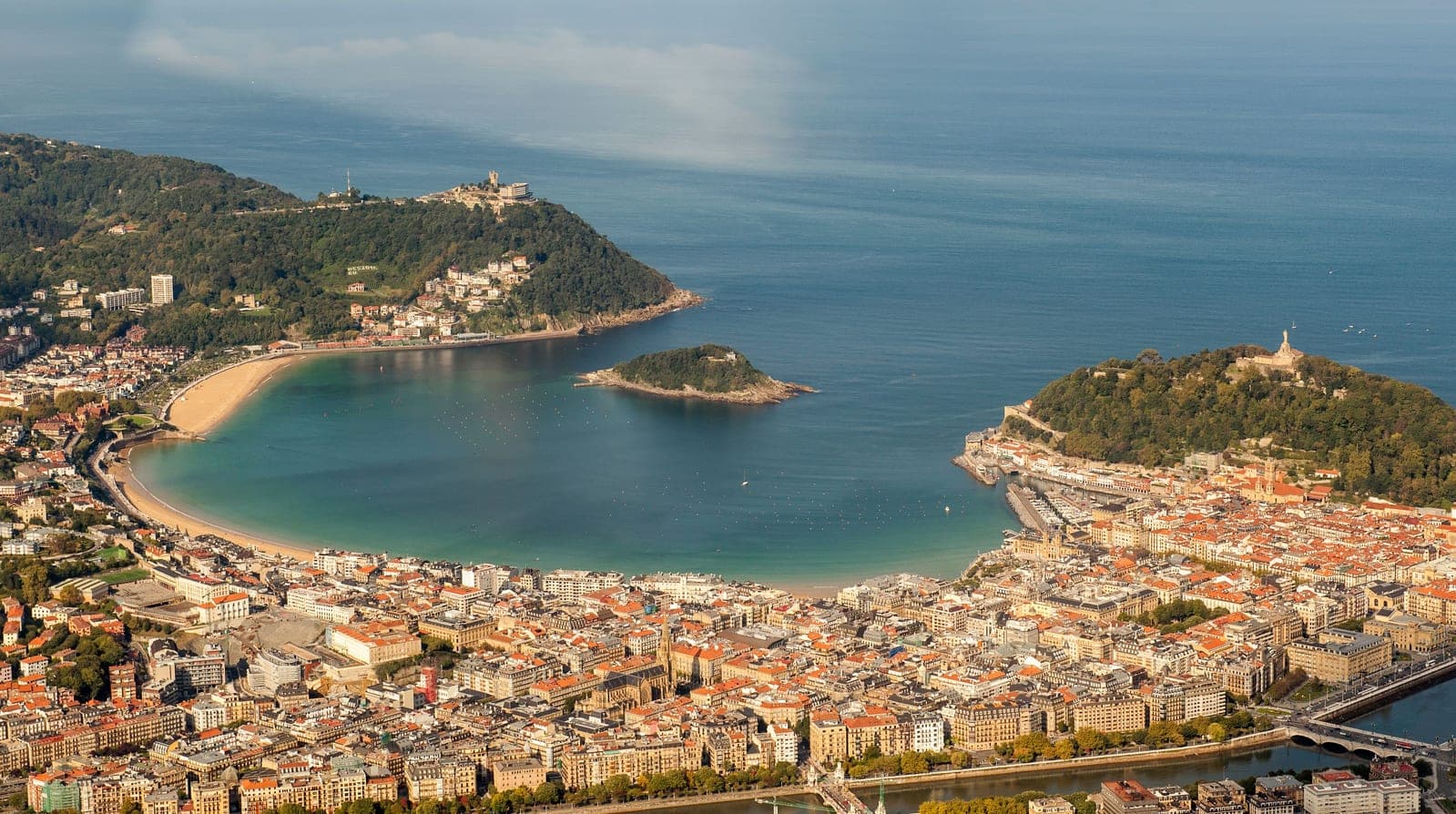 A stunning aerial view of La Concha Bay, San Sebastián, with lush hills and cityscape.
| Option | Best for | Why choose it | Trade-off | Access |
|---|---|---|---|---|
| Frontline Beachfront (Paseo de la Concha)Waterfront Promenade | Unobstructed bay views, direct beach access, historic grand hotel atmosphere | Instant access to La Concha sand and promenade without crossing arterial traffic | Higher nightly rates, summer promenade foot traffic and coastal weather exposure | Step-free promenade walking; direct taxi pull-up via Paseo de la ConchaAs of September 2026Checked 1 Sept 2026Sources1 |
| Second-Row Centro (San Martín / Zaragoza Plaza)Urban Commercial Grid | Lighter nightly room spend, quieter night sleep, instant pedestrian shopping | One to two blocks behind the waterfront offers sheltered alleys with identical 2-minute beach access | No direct water views from lower floors; street views over pedestrian plazas | Pedestrianised grid, step-free access to Mercado San Martín and underground car parksAs of September 2026Checked 1 Sept 2026Sources1 |
Hotel de Londres charges more for an uninterrupted La Concha outlook. One street inland, Hostal Bahía and Zaragoza Plaza lower the average rate and reduce promenade noise while keeping the beach close.
What the bay view costs, and what one street inland saves
Front-line hotels charge for an unobstructed bay outlook and immediate promenade access. One street inland, the view disappears but the practical beach access remains, so the rate premium only makes sense when the panorama is central to the stay.
Front-row properties sell the uninterrupted panorama. Moving one street inland changes the value calculation: Hostal Bahía San Sebastián keeps the beach close at a lower average rate, while Zaragoza Plaza pairs a similar rate with modern climate control. Choose the promenade only when the view will materially improve the stay.
Second-row courtyards block promenade sweepers and delivery vans
The acoustic environment changes drastically across a 50-metre distance. Front-line properties face the historic promenade railing designed by Juan Rafael Alday at the beginning of the twentieth century. This waterfront spine, anchored by the 1912 La Perla Thalassotherapy centre, acts as a primary pedestrian and maintenance artery from dawn until late evening. Rooms directly facing the water catch the early morning street-sweeping crews, delivery vehicles servicing the spa, and consistent pedestrian movement.
Moving inland provides more separation from promenade activity. Second-row buildings often use interior courtyards rather than street-facing facades, so light sleepers should compare an inner-yard room at Hostal Bahía San Sebastián.
Hostal Bahía's interior standard rooms face a small inside yard rather than the street. You sacrifice natural light, but reduce exposure to the city's early promenade activity. Travellers wanting modern climate control near the water should compare Zaragoza Plaza.
Single rooms here range from Plaza Zaragoza and city views to interior patios or terraces overlooking a block courtyard. An interior aspect offers the strongest chance of a quiet night, although it gives up the open outlook. The inner blocks also provide more separation from the seafront.
Urban low-emission zones complicate beachfront luggage drops
Reaching your bed with luggage requires navigating municipal transit rules. San Sebastián is a low-emissions destination, operating an urban low-emission zone across its core. Driving a vehicle along central beach and promenade streets requires a valid permit to circulate. For self-driving travellers or anyone arriving by rental car, this regulatory boundary turns an arrival into an administrative hurdle.
First-time visitors wanting traditional coastal scenery and a direct horizon should book Hotel de Londres y de Inglaterra.
This property does not let you simply pull a car up to the front doors without prior authorisation. To manage the transit restrictions, it explicitly instructs guests using GPS navigation to enter Plaza Zaragoza 1, 20007 San Sebastián rather than its seafront facade address, routing vehicles away from the restricted perimeter. Trying to reach the front entrance by car without an approved permit risks traffic penalties. You unload on an interior square, haul bags around to reception, and surrender door-to-door vehicle access in exchange for the view.
Second-row hotels largely bypass this operational headache. Hostal Bahía's official address at San Martín, 54 bis places it on an established inner street. Navigating the broader where to stay in San Sebastián road network is noticeably simpler when your destination sits on a standard municipal corridor. Taxis and private cars approach without negotiating the tightest coastal restrictions.
La Concha beachfront hotels vs second row San Sebastián: structural differences dictate your budget
The physical divergence across these two accommodation zones reveals two distinct approaches to urban space. Front-line properties demand substantial capital for sea-facing glass and heritage preservation. Hotel de Londres y de Inglaterra operates from its historical address at Zubieta Kalea, 2, dividing over 150 years of history across 166 rooms in nine distinct categories. Staying here secures a legacy footprint right on the sand, but ties your daily movements to the busiest pedestrian artery in the region.
Stepping inland shifts the financial equation without entirely sacrificing historic character. Hotel Zenit Convento San Martín operates inside a converted 1887 convent situated two blocks back from La Concha Beach, proving that period masonry exists away from the water. For visitors prioritising central utility over water vistas, Hostal Bahía operates within the romantic area right in the town centre. A few paces away, Zaragoza Plaza is officially registered under code HSS00642 as a functional, street-level base just steps from the sand.
Civic infrastructure also anchors itself away from the immediate beachfront. The official tourism office of Donostia / San Sebastián operates at Ijentea, 1, situating vital visitor services just behind the primary coastal strip. If morning water panoramas are secondary to uninterrupted rest and preserving funds for the city's pincho bars, sleeping one or two streets inland delivers the practical advantages of the waterfront without the promenade surcharge.
Choose by your priorities
Frequently asked questions
Is a La Concha beachfront room worth paying more for?
Choose the promenade when the uninterrupted bay view is part of the trip itself. If the room is mainly a place to sleep, moving one street inland gives better value and more separation from seafront activity.
Which option suits a light sleeper?
Start with an inner-yard room at Hostal Bahía and confirm the exact aspect before paying. It gives up daylight and the sea view in exchange for greater separation from promenade noise.
Which option balances modern comfort with a lower rate?
Zaragoza Plaza is the middle choice: close to the beach, modern climate control and a lower average rate than the front-line promenade option. Ask for an interior aspect if street activity concerns you.